Skip to content

D
iabetes is such a broad topic! I have personally noticed that the general public doesn’t know much about it, other than “you have to be on insulin.” Or, “you got it because you’re fat.” Both are incorrect. Do you know about Mellitus and Type 1 & Type 2 Diabetes?
So, I have chosen to write this post to give you all the ‘sweet tea’. We will go over what it is, some of the risk factors, symptoms of diabetes, and things you can do to prevent it.

I would add that even if it is a disease, it does not mean that you have no control. There are ways you can help manage your diabetes aside from any medications.
Like many others, including high blood pressure or high cholesterol, the beauty of this chronic illness is that your lifestyle and daily habits play a massive role in its progression and control.

Despite receiving a diagnosis of a chronic disease, you have the power to take action. So don’t let that keep you down! With the combination of your effort and your physician’s help, you can lead a very healthy life without complications of the disease. It takes a partnership for anything to work, and this includes your health. ✓
Listed below are the two types of diabetes, but I will be focusing on the signs and symptoms of type 2 diabetes.

Type I Diabetes Mellitus
Type 2 Diabetes Mellitus

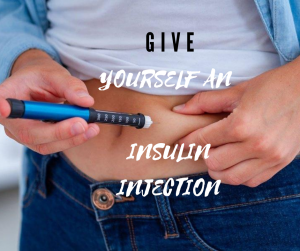
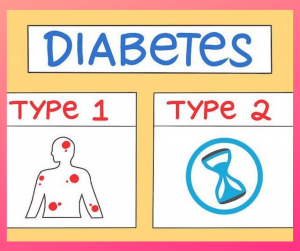
The most notable difference is that in type 1 diabetes, the pancreas produces little to no insulin. In contrast, in type 2 diabetes, your pancreas makes plenty of it, but your body is just not responding to it, AKA resistant to it.
The treatment of these two types is, therefore, quite different. If your body isn’t making it, such as in diabetes mellitus type 1, treatment would be to give yourself insulin. It is the reason why it’s called insulin-dependent diabetes mellitus.


Before I discuss specific risk factors for diabetes, I just want to make you guys aware that there are different “classes” of risk factors.
Family history of type 2 diabetes
If your family members have type 2 diabetes, it increases your risk of developing it in the future as well.
✓ Even though type 1 diabetes can be caused by autoimmune disease, which can run in families, type 2 diabetes has a more robust “hereditary” pattern than type 1.

The past medical history of gestational diabetes (GDM) is important to consider.
Did you know that being diagnosed with diabetes during pregnancy increases your chances of retaining it or developing it later, even after delivery? Gestational diabetes is a whole other topic for another day, but for it to be called Gestational Diabetes Mellitus (GDM), you must develop it after 20 weeks of pregnancy. Sugar issues during pregnancy are due to glucose intolerance, and most resolve after delivery.
But did you know that your risk of developing diabetes is about 3–7 times higher than the average person, even 5–10 years after delivery and the resolution of gestational diabetes?
Additionally, infants born to mothers with gestational diabetes mellitus (GDM) face an increased risk of obesity and diabetes throughout their lives. So there is a higher risk of diabetes in both mother and child later in life.
Excess adipose tissue (fat), and in particular visceral (abdominal) fat, increases your risk of insulin resistance and, therefore, type 2 diabetes.
There are a few theories on that. It’s believed that visceral fat might cause two things. One, the accumulation of fat in the liver and muscle causes insulin resistance in both organs; and two, visceral fat releases cytokines and proteins that help with signalling in the body, affecting your whole body’s response to insulin.
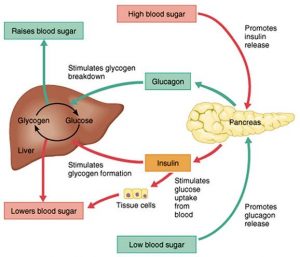
Your liver is responsible for sugar creation (gluconeogenesis) and sugar storage (fatty acids, glycogen, and triglycerides – energy for later use). Insulin stops gluconeogenesis because it is a signal that there is enough sugar in your blood; there’s no need to make more. Insulin also promotes the creation of fatty acids (building blocks of triglycerides). If your liver is resistant to insulin, it won’t be able to stop gluconeogenesis, which contributes to high sugars, while still promoting fatty acid production and deposition as triglycerides. It is the reason why diabetes can also cause high cholesterol and triglycerides.
Your muscles are involved in the use of sugar. Insulin makes your muscles take up sugar from your bloodstream so it can do the work and grow. Insulin resistance causes your muscles to weaken. But there is good news here — The more you move, the more capable your muscles are of pulling sugar into themselves for use. That’s why exercise is GOOD if you have diabetes. By exercising and using the tissue, you make it less resistant to insulin and allow the muscle to pull sugar into its cells and out of your bloodstream. It helps you control your blood sugar!
This brings me to the next risk factor.
Sedentary lifestyle – aka inactivity
The less you move, the less your body will respond to insulin. Exercise improves insulin sensitivity. So, being sedentary does the opposite. Inactivity also promotes obesity, which then increases your risk of developing diabetes. It’s a cycle, and each part contributes. ✓
Disrupted sleeping behaviours
When your sleep is affected, the way your body responds changes. Hormones in your body change, and so does your response to them. Not sleeping well increases the release of ghrelin (hunger stimulation) and decreases leptin (fullness stimulation). So you will feel hungrier and less full, and you will eat more. It would not be an issue if you were active and you burnt what you consumed. However, if you don’t burn more calories than you consume, it will be deposited as fat. Do you see the cycle yet? Everything contributes!
Race and Ethnicity
The reason is that individual races and ethnicities have a higher prevalence of obesity and diabetes. It is part of your genetic pool. Therefore, being part of these groups also increases your risk of developing diabetes. ✓
This does not mean that you WILL get diabetes. It indicates that you need to take extra measures to keep moving, have healthy eating habits, and sleep well to prevent obesity and the development of diabetes.

Races and ethnicities with a high prevalence of diabetes in the USA include:
(This list is not arranged from highest to lowest.) (Just a general list.)
Consider factors such as age and gender.
Females are at about 1.3–1.7 times higher risk of developing diabetes compared to males during adolescence. Many young girls have been diagnosed with diabetes around puberty, which is at about age 13-14. About 40% of cases occur around 10-14, while the other 60% occur at 15-19.
So imagine a Hispanic woman, with a family history of diabetes, who develops gestational diabetes during pregnancy, who was unable to lose all the “baby weight” and is now considered obese from a clinical standpoint.
Her risk of developing diabetes is even higher than if she were just a Hispanic woman or a woman with gestational diabetes. The compounding effect of each of these factors significantly increases her overall risk.
I know, it sounds nearly impossible to avoid developing diabetes. BUT, you’re wrong! That is the fantastic thing about your body! Your health is greatly affected by your physical activity and what you put in your body!

SYMPTOMS
Catching the first signs of diabetes is crucial to prevent any complications of uncontrolled diabetes mellitus. Listed below are some significant symptoms of high blood sugar.
DIAGNOSIS – Catch early signs of diabetes.
As soon as you develop the first signs of diabetes, you should see a physician to evaluate you and develop a plan. There are a few ways to diagnose diabetes. ✓
You can diagnose diabetes using a fasting blood glucose level, a 2-hour oral glucose tolerance test, or a haemoglobin A1c test.
Your A1c level is a percentage, which you should commit to memory. Haemoglobin is the protein within your red blood cells that helps carry oxygen throughout your body. This protein can become ‘glycated’, meaning coated with sugar, in people with diabetes.
Your red blood cells can have a lifespan of 90 days unless you have a medical condition that causes earlier cell death.
A1c is the average percentage of sugar coating your red blood cells over those 90 days. So it gives you an average sugar level for the last three months. ✓
Pre-diabetes has an A1c between 5.7 and 6.4%. Diabetes has an A1c ≥ 6.5%.
Critical information to grasp here is that as we grow older, we are more sensitive to low sugar levels, and low sugar is more dangerous than high sugar. Therefore, your target A1c level may vary based on your age. Make sure you review these facts with your doctor to ensure the medical management of your diabetes mellitus is tailored to you. Family medicine residency offers comprehensive training for future primary care physicians.
So, how can you prevent the development of diabetes mellitus? Notice I didn’t ask, “CAN you prevent it?” I asked, “How DO you prevent it?”
Because you can. ✓
Please try to exercise as much as you can, as often as you can. Children should engage in at least 60 minutes of moderate to vigorous exercise daily, while adults should engage in at least 30 minutes a day, five times a week.
Refer to my other post on exercise to know the difference between moderate and vigorous workouts. ✓
At least 7–8 hours a night. It will help your body keep your ghrelin and leptin regulated and, therefore, your appetite and food consumption. It also improves your mood, so it doesn’t lead to less healthy food options and snacks. Moreover, it also decreases your odds of developing diabetes. ✓
Eat colourful foods like fruits and veggies—Limit fried foods, junk food, sodas, etc. ✓
Eating colourful foods will help you feel more energetic, allowing you to stay active throughout the day and maintain your weight.
Various ‘diets’, like the vegan diet, Mediterranean diet, and DASH diet, have shown good efficacy at A1c reduction. But I will leave that to a different blog post too. ✓
You should move more, have healthier eating habits, and receive a solid night’s rest every day. It is the best way to help prevent the development of diabetes. Additionally, this approach can help you reverse pre-diabetes and effectively control and manage diabetes without the need for medications. Of course, there are times when even these things need an extra boost, and that is where your doctor will come in to help by prescribing blood sugar-lowering medication. However, much of the success in managing diabetes ultimately depends on your efforts.